


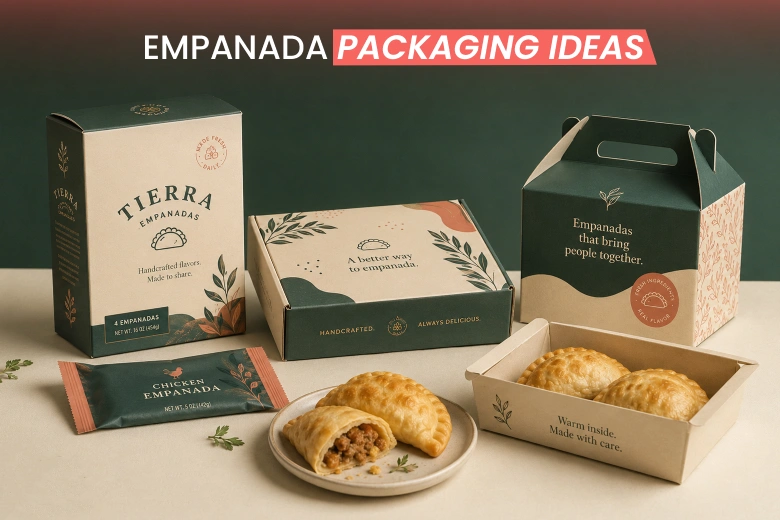
Empanadas, who doesn’t love them? These baked goods are the ultimate comfort food. They are
 Skip to content
 If you’re running a soap business, your packaging is more than just a container. It signals quality, communicates your brand story, and determines whether a customer picks your soap off a shelf or scrolls past it online.
This guide covers 12 proven soap packaging ideas for bar soap, liquid soap, and handmade formats — with material options, budget tiers, and what each style is actually best for, so you can make a decision, not just get inspired.
Before choosing a packaging style, this distinction matters: bar soap and liquid soap have fundamentally different requirements, and applying the same logic to both is one of the most common mistakes soap business owners make.
Bar soap is solid and stable. It needs protection from moisture, physical damage, and UV light — but it works with almost any rigid or semi-rigid format: wraps, sleeves, boxes, bands, and holsters. Breathability is a plus for cold-process soaps that continue curing post-packaging.
Liquid soap needs a sealed container (bottle, pouch, or pump dispenser). Labels must be waterproof — standard paper labels peel off pump bottles within weeks of handling. Materials must be compatible with prolonged liquid contact. Kraft wraps and open formats are entirely out.
Throughout this article, each idea is tagged:
The right soap packaging doesn’t just protect your product — it does the selling before your customer reads a single word on the label. Here are 12 ideas that cover every price point, format, and brand aesthetic.

Best for: Etsy sellers, farmers markets, holiday gift sets, wedding favors
People buy with emotion first. Wrapping a handmade bar soap in kraft paper, floral tissue, or muslin cloth tied with twine instantly elevates perceived value — and it can cost as little as $0.10–$0.30 per bar in materials.
For liquid soap gift sets, pair a frosted glass bottle with a coordinating kraft gift bag and a ribbon. The key is consistency: when the wrapping material, ribbon color, and label font all feel intentional together, the product reads as premium even at a modest price point.
What to use: Kraft paper, tissue paper, muslin cloth, twine, wax paper MOQ: No minimum — fully DIY-friendly at any volume Budget tier: $ (lowest cost option on this list) Eco note: Kraft and tissue paper are biodegradable. Avoid plastic cellophane if eco positioning matters to your brand.

Best for: Small batch producers, minimalist brands, craft soap sellers, boutique retail
A cigar band — also called a belly band — is a paper strip that wraps around the center of a bar soap. It’s one of the most cost-effective ways to achieve a professionally branded look at low MOQs, which is why it’s the most common first packaging choice for new soap businesses.
The band holds your branding (logo, scent name, key ingredients) while leaving the top and bottom of the bar exposed. That openness is actually a selling point at retail: customers want to touch and smell before buying. A band lets them do that while still presenting a clean, branded product.
You can print cigar bands on cardstock at low quantities, making them one of the most flexible options for testing new scents or seasonal editions before committing to a full box run.
Budget tier: $ — as low as $0.08–$0.15/unit at 100 units MOQ: As low as 50–100 units with digital printing Eco rating: High — minimal material use, paper is recyclable

Best for: Natural soap lines, organic formulas, zero-waste brands, eco-conscious retail buyers
“Eco-friendly” is a claim almost every soap brand makes. The ones who back it up with specifics are the ones customers and retailers trust. When choosing sustainable soap packaging, look beyond the word “recyclable” and ask about the full material picture.
What to look for specifically:
Kraft soap boxes made from FSC-certified board with water-based inks are the most defensible eco packaging choice for a soap brand. If you also want to explain what paperboard is and why it’s used, it’s a good material to understand before you order.
Budget tier: $$ — slight cost premium (usually $0.05–$0.15/unit over standard) Eco rating: Highest — if you use FSC board, water-based inks, and compostable window film together

Best for: Artisan soap brands, rustic or natural aesthetics, farmers markets, retail display
A holster partially wraps your soap — covering the label band area — while leaving both ends of the bar exposed. It’s a minimalist format that achieves several things at once: customers can see and smell the product, it uses less material than a full box, and it photographs extremely well for e-commerce and social media.
Holsters also provide a functional grip for display. Soaps in baskets or on shelves don’t slide the way fully wrapped bars sometimes do, which matters if you’re selling at a retail counter or market stall.
For custom holster soap boxes, the structure is typically printed on thick uncoated kraft (350–400gsm) — dense enough to hold its shape without looking stiff. The format reads as handmade even when it’s professionally printed, which is a genuine asset for artisan brands.
Budget tier: $$ MOQ: 100–200 units for custom printed Eco rating: High — minimal material, no laminate required

Best for: Premium price-point soaps ($18+), spa and hotel amenities, department store retail, gift box sets
Luxury soap packaging works because it signals value before the product is touched. The combination of structural choices and finishing techniques is what separates a $5 soap from a $25 one in the customer’s mind — even when the formula difference is minor.
The elements that actually create a luxury feel:
For luxury liquid soap: frosted glass pump bottles with metal collar dispensers, combined with a printed folding carton outer box using the above finishes, achieve the same premium result.
Budget tier: $$$–$$$$ (rigid boxes: $1.50–$4.00+/unit; folding cartons with foil: $0.60–$1.50/unit) MOQ: 300–500 units typical for luxury folding cartons; 100+ for rigid boxes Eco note: Soft-touch laminate and foil blocking are not recyclable. For eco-luxury positioning, use blind emboss (no foil) on unlaminated board — this reads as refined without the environmental cost.

Best for: Retail display, artisan soaps with visible texture or color, natural soap lines
A die-cut window on a soap box lets customers see and smell the product without opening the box, and adds a design element that makes packaging memorable on a crowded shelf. Shape options have expanded significantly — hearts, ovals, leaf forms, hex cutouts, and abstract organic shapes all work for soap.
The shape should reflect your brand’s aesthetic. A heart window on a rose soap makes immediate sense. A hexagonal window on a honeycomb or beekeeping-related soap brand reinforces the product story without a single word.
Important material choice: If your window requires a clear film backing, use compostable NatureFlex film rather than PVC. PVC windows make the entire box non-recyclable — a significant problem for eco-positioned soap brands. NatureFlex is compostable and increasingly the standard in sustainable retail packaging.
Die-cutting is a one-time tooling cost (the physical die) that gets amortized across your print run. At 500+ units, the per-unit cost impact is minimal.
Budget tier: $$ MOQ: 200–500 units typical

Best for: Small batch producers, starter businesses, liquid soap bottles, refill formats, farmers markets
Custom labels are the most accessible entry point into branded packaging. They work on bottles, jars, pump dispensers, and directly on bar soap as a wrap label. The label material matters more than most people realize — it’s not just aesthetic.
Label material guide:
For handmade soap brands selling at markets or online, a well-designed PP label on a simple kraft wrap or cigar band achieves a very professional look at 25–50 unit MOQs.
Budget tier: $ (paper labels) to $$ (foil/specialty stocks) MOQ: As low as 25–50 labels with digital label printing

Best for: Mid-range soap brands, scent-differentiated product lines, retail and e-commerce
Sleeve packaging slides snugly around a bar soap, covering the long sides while leaving the top and bottom exposed. It’s clean, modern, and particularly effective for brands selling multiple scents — each variant gets a differently printed sleeve while the format stays consistent.
Scent-to-color matching guide:
Matching your sleeve color to your soap’s scent is one of the highest-impact branding decisions you can make with minimal extra cost. Here’s a practical reference table:
| Scent | Color Direction | Psychology |
|---|---|---|
| Lavender | Soft purple, dusty mauve | Calming, restorative |
| Citrus (lemon, orange, grapefruit) | Warm yellow, bright orange | Energetic, fresh |
| Eucalyptus / Mint | Cool green, white + teal | Clean, breathing-space |
| Rose / Floral | Dusty pink, blush, warm cream | Romantic, soft |
| Charcoal / Activated charcoal | Deep gray, near-black | Detox, deep-clean, masculine |
| Vanilla / Honey | Warm amber, cream, caramel | Comforting, indulgent |
| Aloe Vera / Green Tea | Soft sage green, white | Gentle, natural, hydrating |
| Sandalwood / Oud | Terracotta, deep brown | Earthy, warm, luxury |
| Ocean / Sea Salt | Navy, sky blue, sand | Coastal freshness |
| Peppermint | White, bright green accent | Sharp, invigorating |
The rule: cool tones signal clean and fresh; warm tones signal indulgent and moisturizing. Design your entire sleeve palette from this logic, not from what looks good in isolation.
Budget tier: $$ MOQ: 100–250 units Eco rating: High — minimal material, easy to keep unlaminated and recyclable

Best for: Novelty soaps, gift products, children’s lines, seasonal editions, premium differentiation
Breaking the rectangle is the fastest way to stand out in the soap category. Hexagonal boxes work for honeycomb or apiary-themed soap brands. Heart-shaped boxes are reliable for Valentine’s Day or wedding favor soaps. Circular paperboard works well for round-molded artisan bars.
Custom shapes involve a one-time die tooling cost but this is quickly amortized at 500+ units. For smaller runs, ask your supplier about shared die shapes — many manufacturers have pre-cut hex, oval, and pillow dies that you can use without the custom tooling fee. Understanding the basics of binder board (the material used in more structured shaped boxes) will help you assess supplier quotes accurately.
Budget tier: $$$ for fully custom; $$ if using supplier’s existing dies MOQ: 300–500 units for custom shapes; lower for shared dies

Best for: Handmade soaps, gifting, boutique retail, unboxing-focused DTC brands
The curved, pillow-like shape of soap pillow boxes creates a premium feel without the cost of a rigid setup box. They assemble quickly (no glue required for most styles), stack cleanly in storage, and deliver a strong unboxing experience for their price point.
Pillow boxes work especially well with full-bleed printing — the curved surface makes even simple gradient or texture designs appear dimensional and considered. For kraft pillow boxes, the natural texture of the board is itself a design element.
This format is one of the best value-to-perceived-premium ratios on this list. A well-printed kraft pillow box can compete visually with packaging that costs twice as much.
Budget tier:
–$ MOQ: 100+ units Eco rating: High — typically no laminate required; kraft versions are fully recyclable
Best for: Retail counters, POS displays, wholesale accounts, multi-unit retail selling
A soap display box is a counter-ready unit that holds 6, 12, or 24 soap bars open on a retail surface, allowing customers to pick directly. For any brand selling into retail — boutiques, spas, hotel gift shops, natural food stores — soap display boxes are not optional, they’re the format that makes retail accounts work.
The display box functions as a silent salesperson: it carries your brand name, scent or product information, and any certifications (organic, cruelty-free, vegan) so retail staff don’t need to explain the product. For wholesale accounts, a well-designed display box is often what gets you a trial order.
For broader retail display applications beyond soap, display boxes as a category are worth understanding — the structural options vary significantly by retail environment.
Budget tier: $$ — slightly higher per-unit cost but reduces individual unit packaging expense MOQ: 200–500 units typical

Best for: Gift sets, luxury positioning, holiday editions, wedding favors, premium unboxing
A silk or satin ribbon tied around a soap box or pillow box adds a tactile luxury signal at very low cost. Custom-printed ribbons (with your brand name or a short phrase woven in) are available at reasonable MOQs and create a memorable moment when a customer receives the product.
Other finishing touches worth considering:
If you’re shipping gift sets, box inserts and dividers are worth understanding alongside these finishing elements — they prevent the soap from moving inside the box during transit, which affects both condition on arrival and the unboxing experience.
Budget tier: $ for ribbons; $$ for custom-printed ribbons MOQ: Custom ribbon printing typically starts at 50–100m
One of the most common mistakes small soap businesses make is choosing packaging that looks right but is completely wrong for their actual run size. Luxury rigid boxes ordered at 300 units when you sell 40 soaps a month will sit in storage for two years. Here’s a practical breakdown by stage:
| Business Stage | Monthly Volume | Best Formats | Approx. Cost/Unit |
|---|---|---|---|
| Starting out | 50–150 bars | Cigar bands, custom labels, kraft wrap, pillow boxes | $0.10–$0.40 |
| Growing | 150–500 bars | Sleeves, holster boxes, folding cartons, die-cut window boxes | $0.35–$0.90 |
| Established | 500–2,000 bars | Rigid boxes (luxury tier), display boxes, custom shapes | $0.60–$2.50 |
| Scaling / wholesale | 2,000+ bars | Full offset runs, custom dies, multi-SKU display programs | $0.30–$1.00 (volume discount) |
The rule: Start with the format that looks professional at your actual volume. Upgrade the packaging as volume justifies the investment — not before.
Handmade soap has a distinct set of packaging needs that mass-market brands don’t share:
1. Breathability matters. Cold-process handmade soap continues to cure after packaging. Fully sealed, airtight packaging can trap moisture and affect the bar quality during extended shelf time. Kraft wraps, cigar bands, and open-end sleeves all allow airflow. A fully enclosed folding carton is fine for cured bars but less ideal for fresh-cut cold-process soap going straight to market.
2. Ingredient transparency is expected. Handmade soap buyers actively want to know what’s in the product. Your packaging must have room for a full ingredient list — and if your soap is sold as a cosmetic, INCI names (International Nomenclature of Cosmetic Ingredients) are legally required. See the labeling section below.
3. Authenticity signals matter more than polish. Uncoated kraft, twine, handwritten-style fonts, and botanical imagery align with handmade positioning. Over-designed corporate-looking packaging often works against artisan brands — it creates a mismatch between what the packaging signals and what the product delivers.
4. Low MOQ is a real constraint. Most handmade soap makers can’t commit to 500-unit runs. Cigar bands (50-unit MOQ), custom labels (25–50 unit MOQ), and pillow boxes (100-unit MOQ) are the practical starting formats. Plan your packaging around your actual production capacity, not your aspirational volume.
This is the section most packaging guides skip. If you’re selling soap in the United States — especially at retail — understanding the labeling rules is not optional.
How your soap is classified determines what must be on the label. The FDA and FTC set these requirements, not packaging convention.
The FDA defines soap as a product where the cleansing action comes exclusively from alkali salts of fatty acids (saponified oils). If your product meets this definition and you make no cosmetic claims, it falls under the FTC’s Fair Packaging and Labeling Act — not FDA cosmetic regulations.
Required label elements:
If you make any cosmetic skin-benefit claim — “moisturizing,” “softening,” “antibacterial,” “anti-aging” — the product becomes a cosmetic under FDA rules regardless of the formula. Additional requirements apply under 21 CFR Part 701.
The practical test: If your label says “lavender bar soap” with no skin claims, you’re likely under FTC rules. If it says “moisturizing lavender soap,” you’re in FDA cosmetic territory. When in doubt before a retail launch, consult a cosmetic regulatory specialist.
Before ordering, use our dieline templates to plan your label layout and confirm you have enough surface area for all required information at a legible size.
The printing method determines color accuracy, minimum order quantity, and per-unit cost. This matters before you go to a supplier:
| Packaging Type | Best Printing Method | Key Notes |
|---|---|---|
| Kraft cigar bands / sleeves | Digital printing | Best for 50–500 units; colors appear muted on uncoated kraft — design for this deliberately |
| White folding cartons (short run) | Digital printing | Full color accuracy; photographic images work |
| White folding cartons (long run) | Offset lithography | Best from ~1,000 units; significantly lower per-unit cost at scale |
| Kraft folding cartons | Flexographic or digital | Flexo best for 1–2 color simple designs on kraft; avoid photographic images |
| Rigid setup boxes | Offset litho + hand finishing | Foil blocking and emboss are applied post-print; requires specialist supplier |
| Labels (bar soap, dry use) | Digital label printing on paper stock | Paper stock appropriate for dry conditions only |
| Labels (liquid soap / wet use) | Digital label printing on PP stock | Polypropylene is waterproof — mandatory for pump bottles and shower products |
| Sleeve packaging | Digital (short) / Flexo (long) | Full-bleed digital gives excellent per-scent color differentiation |
If you’re looking at real-world examples of well-executed soap packaging across different market positions, these brands are worth studying before you design:
The pattern across all of them: the packaging matches the brand promise exactly. There is no mismatch between what the packaging signals and what the product delivers.
“Eco-conscious customers” is not specific enough to design for. Ask more precise questions: Are they buying for themselves or as gifts? Are they shopping at a farmers market, a boutique, or on your website? Are they paying $8 for soap or $28? Each answer changes your format, material, and design language. A packaging decision made for the wrong audience will always underperform, regardless of quality.
Measure your soap bar’s actual dimensions — length, width, and height — and add 2–3mm clearance on each side. A box that’s too large makes the bar rattle and feel cheap. One that’s too tight splits at the seams. Use our product dimension guide before placing any packaging order.
The most common mistake in soap packaging design is prioritizing visual decoration over readability. A customer picking up a soap needs to find three things in under three seconds: what it is, what scent or key ingredients it contains, and what makes it worth the price. If your label design makes any of those hard to find, the decoration is actively hurting your sales.
Sustainability requirements from retailers are tightening. If wholesale accounts are part of your growth plan, understanding sustainable packaging trends now will save you from costly reformatting later. FSC certification and compostable window film are increasingly table stakes for natural product retailers.
What is the best packaging for handmade soap?
Cigar bands, kraft wraps, and sleeve packaging are the most practical starting formats for handmade soap. They have low MOQs (50–100 units), good eco credentials, and enough surface area for branding and required label information. As your volume grows, folding cartons and holster boxes add more shelf presence and structural protection.
What must be on a soap label legally in the United States?
At minimum: product name, net weight in US and metric units, and the name and address of the manufacturer or distributor. If your soap makes any skin-benefit claims (“moisturizing,” “antibacterial,” “softening”), it’s classified as a cosmetic under FDA rules and must also include a full INCI ingredient list. Consult a regulatory specialist before any retail launch.
What is the cheapest way to package soap professionally?
Cigar bands (belly bands) printed on kraft cardstock. A digitally printed kraft belly band can cost $0.08–$0.15 per unit at 100 units. Pair it with a simple PP product label on the bar itself for complete, professional branding with no full box required.
What materials are best for eco-friendly soap packaging?
FSC-certified kraft paper, uncoated cardboard, and recyclable paperboard. For printing, choose soy-based or water-based inks. Avoid UV varnish and soft-touch laminate (both compromise recyclability). For window boxes, use compostable NatureFlex film instead of PVC.
What is holster-style soap packaging?
A holster is a partial wrap — typically a U-shaped or saddle-shaped structure — that covers the label area of the bar while leaving both ends open. It’s similar to a sleeve but more structured, usually printed on thick kraft card. Popular for rustic and artisan aesthetics, and practical for retail display because it holds its shape on a shelf.
What is the difference between a cigar band and a sleeve?
A cigar band (belly band) wraps around only the middle section of the bar, leaving both ends fully exposed. A sleeve wraps around the full length of the bar, covering the long sides and leaving only the top and bottom open. Sleeves offer more printable area and a more enclosed look; bands use less material and give greater product visibility.
What packaging is best for liquid soap?
Liquid soap requires a sealed container — HDPE or PET plastic, or glass — with a pump or flip-cap dispenser. Labels must be waterproof polypropylene. For premium liquid soap, frosted glass bottles with metal pump collars combined with a printed outer folding carton achieve a strong luxury result. Refill pouches with printed labels are a growing eco-forward option for DTC liquid soap brands.
What are soap display boxes used for?
Soap display boxes are counter-ready packaging that hold multiple bars open for customer self-selection at retail. They function as a silent salesperson — carrying your brand, scent information, and certifications — so retail staff don’t need to explain the product. They’re essential for any brand selling into boutiques, spas, or natural food stores.
From low-MOQ cigar bands for handmade startups to luxury rigid boxes for premium spa brands, the right soap packaging comes down to matching your format, material, and design to your product, your price point, your distribution channel, and your customer.
The 12 ideas in this guide cover the full range. If you’re not sure which format is right for your soap — your bar size, your run quantity, your brand positioning — the packaging team at Dream Custom Boxes is ready to help. Tell us your soap type, your monthly volume, and where you sell, and we’ll recommend a solution that fits.
Ready to start? Get a quote from Dream Custom Boxes — we work with soap brands from 1-unit handmade runs to 5,000+-units wholesale orders.

Empanadas, who doesn’t love them? These baked goods are the ultimate comfort food. They are
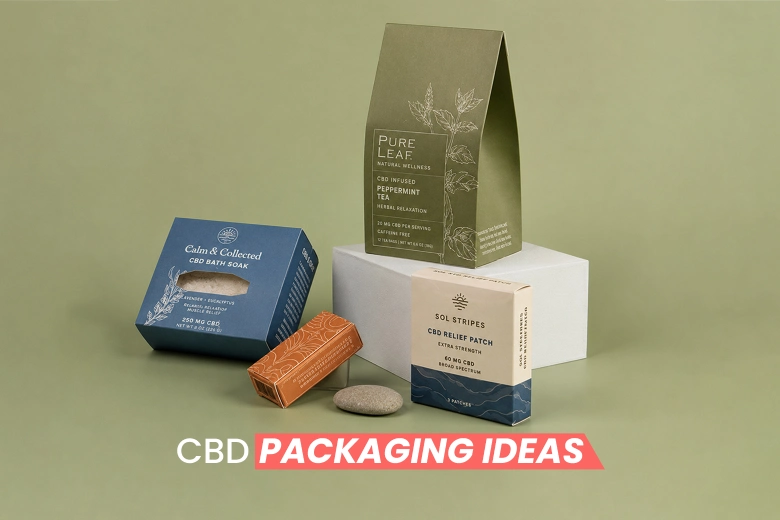
The CBD market is booming, but a crowded retail shelf makes it hard to stand
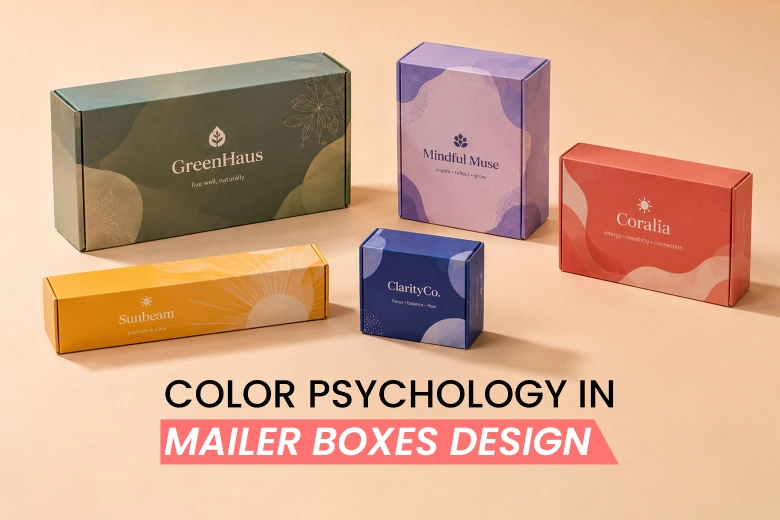
In the world of e-commerce, your product packaging influences customers’ perceptions. While structural integrity is